

Vomiting or throwing up is a common side effect when a dog is sick. It could apply to almost every illness in a dog. As a rule, vomiting should be taken more seriously than, say, diarrhea or loose motions because the underlying reasons can be varied and more complex.
Is Your Dog Vomiting: What does it mean?
Often, the signs that occur before a dog begins vomiting are when its abdominal muscles contract, and it starts salivating excessively. It is painful to vomit, so the dog will not be comfortable. The dog will be anxious, stressed, and restless. Pay attention to the signs. If your dog’s vomiting is a rare occurrence, then it’s likely that there is something it ate that does not agree with it. Take cognizance of that and avoid feeding that food to your dog. If the dog is vomiting continuously or regularly, then it could be a more serious problem.
The Causes Behind Vomiting
Vomiting is when the stomach rejects partially undigested food. However, before the dog actually does vomit, you might notice symptoms such as drooling, retching, or contractions. While there are many causes, some common ones for dogs vomiting include:
- Bilious vomiting symptom
- Motion sickness (after a long car journey)
- Eating foreign substances
- Eating too quickly
- Being overly active soon after a meal
In most such cases, the dog will feel relief after having thrown up or will seek green grass to self-induce vomiting (it is safe). In case the dog has thrown up because it has not digested food, it may try to eat the vomited food back, while repulsive to you, it is common and safe for the dog.
Remember: Throwing up once is okay since it is trying to rid itself of a substance that is in its body. This is normal. However, if the dog continuously throws up, then contact your vet immediately.
While you may address the symptom (vomiting) immediately, an examination to determine the underlying cause and addressing this cause with your vet is essential. When your dog vomits and even after throwing up the food, does not feel any relief, or vomits in succession even when the stomach is empty, it is a sign of something worse. A dog vomiting foam or bile is also a dangerous sign and signals the need for immediate intervention.
DID YOU KNOW? At VOSD –
1. None of our dogs is in chains.
2. We use 10 tonnes of dry food a month
3. We drive, fly, or bring by train 200-250 dogs each year from over 30 cities across India
Why Does this Happen?
Kennel Cough
Kennel cough is a highly contagious respiratory disease among dogs (canine tracheobronchitis). This disease is easily transmitted from one dog to another through mere contact in a contaminated area. Besides symptoms such as nasal discharge, eye drainage, and vomiting, white foam is also a result of this disease. Contact your Vet for a complete diagnosis and treatment. Once the vet has completely diagnosed this disease, treatment will lead to a complete recovery. An antibiotic course will address kennel cough. Search in the search bar above for kennel cough treatment
Bloat
This is a critical and life-threatening condition. During bloat, a dog’s stomach becomes full of gas, liquid, or air. This can create discomfort and pressure on nearby organs. The dog’s stomach gets twisted and does not allow it to expel this gas or belch. In such cases, blood circulation to the heart is restricted, and the dog could go into shock. Get your dog immediately to a vet. This is an emergency. You can get adequate dog vomiting treatment from a veterinarian.
Inflammatory Bowel Disease (IBD)
This happens when a dog’s stomach and/or intestines become inflamed due to cell inflammation. As a result, it affects the digestion of the dog and causes extreme vomiting and diarrhoea. See your vet immediately.
Pancreatitis
This occurrence happens when a dog’s pancreas is swollen and becomes inflamed. As a result, the stomach cannot process /digest the consumed food. See your vet immediately. Search in the search bar above for pancreatitis treatment.
Reflux Gastritis
Observe the time of day when your dog is vomiting. If this is most often in the morning, then your dog could be suffering from Reflux Gastritis, a condition caused when the stomach is irritated by acid (usually on an empty stomach). This condition could also cause the dog to be in severe pain. See your vet immediately.
Kidney disease
Vomiting white foam, apart from being physically weak and disoriented, indicates that your dog could be suffering from kidney disease. See your vet immediately for a physical examination of your dog. Search in the search bar above for renal treatment
Parvovirus
This is a viral infection transmitted through oral contact with infected faeces. This is mostly found in puppies it can also infect any dog. The infection shows up normally a week to 10 days after exposure to a contaminated source. Other symptoms of this disease include fever, bloody diarrhoea, and lethargy. There is no cure for Parvovirus. Any treatment will keep the dog comfortable and lessen the symptoms. Search in the search bar above for parvo treatment
Heatstroke
Heatstroke is a common cause of vomiting. Unbearably high temperatures often cause dehydration, nausea, and regurgitation of food. It is imperative to always keep cool or cold water handy in such a situation in order to prevent occurrences of heat stroke. Dogs that start to feel the effects of heat in the middle of summer are likely to start panting uncontrollably, becoming lethargic and slow, and eventually having a stroke.
Car sickness
Car sickness, or motion sickness, is common for both humans and dogs. It is useful to keep a dog vomiting tablet handy in case you are traveling long distances with a dog in the car. Both a dog’s and a human’s body is not evolved to handle the speeds a car can travel, and it often results in car sickness that could cause vomiting more often than not.
Ingestion of a foreign object/choking
Dogs love to play with toys, and young, teething dogs are likely to try to bite anything they can get their hands on. This is the time to be extra aware of keeping small and dangerous objects around the house. Choking on a foreign object is likely to not agree with the dog. This, in turn, will result in sudden vomiting that may or may not bring the foreign object out. It is the dog’s body’s way of rejecting something that does not agree with it.
Metabolic conditions
When the enzymes in a dog do not adequately break down nutrients and disperse it to the rest of the body, it could lead to severe health issues like diabetes, and so on. If the nutrients aren’t breaking down, or if digestion is an issue, then the dog might react by vomiting out these nutrients and “rejecting” them. If your dog accidentally eats a plant during your daily walks, and that plant hinders the metabolic breakdown of enzymes, it could lead to severe complications
Related Videos



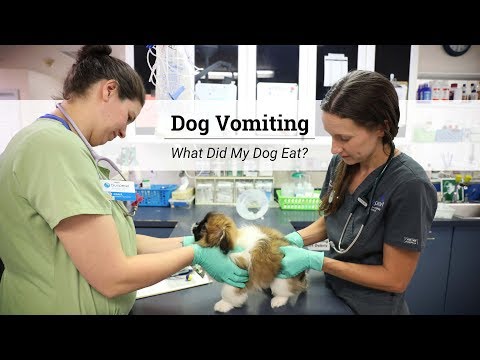
Vet Diagnosis: What to expect?
If your dog is vomiting suddenly but has a history of good health, then it is important to visit the dog’s veterinarian for a diagnosis. Even a little amount of vomiting could be a dangerous thing. Your dog’s veterinarian will prescribe a tablet for dog vomiting, so that the nausea is taken care of. If the vet suspects something more serious, he or she will suggest that diagnostic tests be done to check the dog’s glucose levels and so on. Blood and urine tests are common during this process. Ultrasounds and X-rays are important to check your dog’s abdominal health. Vomiting could be a sign of abdominal cancer or a growth in the abdominal region – and you might be able to spot the tumour in time with a proper veterinary examination.
What Can You Do to Relieve Nausea in Your Dog?
There are drugs available that curb nausea and help with vomiting. Ask your veterinarian to prescribe one as nausea is uncomfortable, and your dog could be in pain trying to vomit (due to the stress on its abdominal muscles). As a pet parent, always ensure that there is water available for your dog, as dehydration is a very common factor in inducing vomiting.
Your dog’s veterinarian might work with you to change your dog’s diet to help this problem. You might have to avoid feeding your dog for a day or two, as per a recommendation by the vet.
Related Products



Treatment for Continuous Vomiting in Dogs
Most of the key reasons for vomiting white foam have been explained in the section before this. Before you see the vet, ensure that you have noted down any other symptoms that the dog has shown at the time of vomiting. Any and more information will help the Vet with a complete diagnosis, besides a series of tests that it will perform on the dog. The orals/injectables that you will need to address vomiting depend on how aggressive the vomiting is:
Oral antacids in syrup base or tablet form
Such as Digene or Mucain that can be given to the dog using a 5/10ml syringe – squirting directly into the mouth at 5ml for 20kg. This can be used 4-5 times a day. This works well if there is mild indigestion or acidity, etc.
Ranitidine (common brand Rantac) for acidity, heartburn, stomach ulcers
It is available as a 25mg/ml solution in 2ml ampules or 150mg tablets. 2ml/ 40kg bodyweight or 150mg/40kg bodyweight oral is an adequate dose. Use oral dose
Ondansetron (common brand Emset) for nausea/ vomiting
Emeset available in 4mg tablets and 2ml ampules. In case you can get the dog to take a tablet, great, but in most cases, with continued vomiting, it will throw up the tablet, because an injection works much better. A 2ml ampule can be given to a 40kg child up to 4 times a day.
Metoclopramide (common brand Perinorm) for nausea, vomiting, and heartburn
Available as a 10mg tablet and a 2 ml ampule. This can be given typically together with Ondansetron for the best action and injectable dose similar to Ondansetron.
In case the dog can keep its stomach contents after 1 dose, continue with a combination of the 4 oral medications.















