

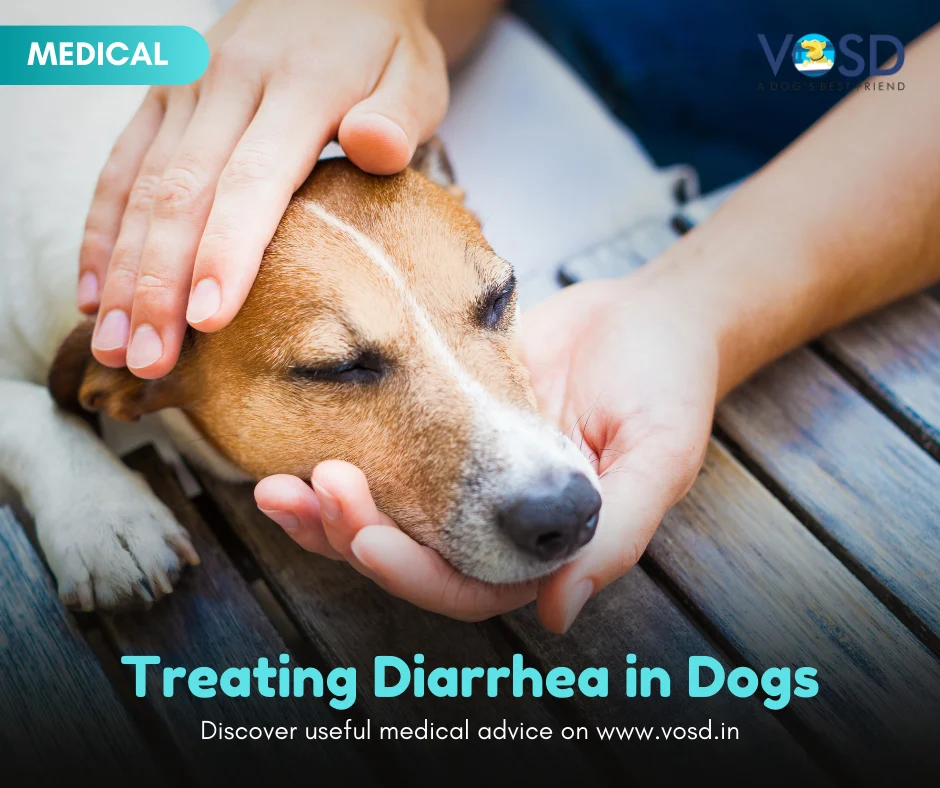
What is Diarrhea?
If you’re seeing an abnormal increase in the amount of fluid in your pet’s faeces, they might be suffering from diarrhea. Sometimes it may just last for a few days, but in severe cases, it can also last for weeks or months. So, it is always best to be prepared well in advance so it isn’t a miserable experience for both you and your dog. As a pet parent, you should ensure that your dog is well-fed, cleaned, and that hygiene is maintained during this time to prevent aggravation of the issue.
What are the Symptoms of Diarrhea in Dogs?
Diarrhea or a loose stool can be accompanied by the following symptoms:
- Vomiting
- Loss of appetite
- Weight loss
- Rumbling in the belly
- Blood in the stool (digested and black in color or red and possibly slimy with mucus)
A Short Intro – VOSD is one of the world’s largest no-kill dog sanctuary & hospital, with 8,000+ life-critical rescues and hundreds of resident dogs. Explore more about VOSD – NGO for Dogs here!
Why do Dogs Get Diarrhea?
As with most animals, dogs tend to put almost anything in their mouth. If your dog is usually healthy and suddenly gets diarrhea, it could be because of many reasons, such as:
- A sudden change in diet, or overeating
- Cancer or other tumours of the digestive tract
- Certain adverse reactions to medications
- Intestinal infection from bacteria, viruses, coccidia, etc.
- Stress
- Allergic reactions to certain food items (milk, gluten, soy, etc.)
- Intake of indigestible material like rocks, bones, toxic plastic material, etc.
- Kidney or liver disease
- Inflammatory bowel disease
Related Videos

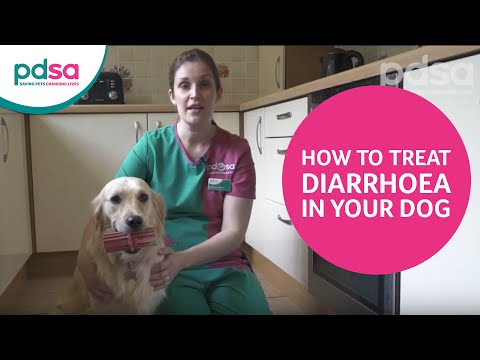

How Should You Treat Diarrhea in Dogs?
For dogs who have diarrhea for the first time (and are otherwise usually healthy):
- Ensure there is plenty of clean water available (to avoid dehydration). Make sure you urge your dog to drink the water (don’t just leave it there).
- Try giving the dog a small meal of boiled rice and a boiled egg/boiled chicken (without bones or skin). This should ideally be the diet until the dog is well again.
- If diarrhea persists for more than 1 day or gets worse, call your vet.
For dogs who have diarrhea and have vomited only once or twice:
- Urge the dog to drink water many times a day.
- Avoid food for half a day (or provide diluted chicken broth).
- After about 6 hours, if the dog has not vomited, then give your dog a small meal of boiled rice and chicken (no bones, no skin). Wait for a few hours and repeat this small meal.
For young or old dogs who have already had health issues, call your vet (this could be an emergency).
- If your dog has frequently passed a loose stool or the stool is watery.
- If there is more than a streak of blood in the stool.
- If there is profuse vomiting or your dog has abdominal pain.
Observe the dog’s stool, as you will need to explain to the vet the colour and consistency of the dog’s stool. This will help the vet diagnose the cause of diarrhea.
How Can You Prevent Diarrhea in Your Dog?
As best as you can, watch what goes into your dog’s mouth, especially when you take your dog out for a walk. Sometimes, dogs chew their pet toys to bits (and swallow the plastic). This should be avoided.
Tip: Keep a tab on any change in food that you might give your dog. Any sudden change of diet will induce diarrhoea in most dogs, so please don’t allow dogs new foods in any large quantities.
Related Products

Treatment of Diarrhoea
With hydration and abstinence from food, the stomach should settle. Please always check with your vet. However, if immediate vet care is not available, do the following:
With hydration and abstinence from food, the stomach should settle. Always check with your vet. However, if immediate vet care is not available and you need to give medicine for loose motion for dogs, do the following:
- Very severe diarrhea (stool comes out like a jet of water): inject 1ml of Hyoscine butylbromide per 40kg bodyweight (this is available in 1ml ampules in brands such as Buscogast or Buscopan). Search above on ‘injecting a dog’. This can be given as IM or subcut. If an injection is not available, give a 10mg tablet per 40kg body weight. The drug will not treat the cause – it will immediately stop the severe stool discharge. Then follow the next step(s):
- Severe diarrhea (continuous liquid discharge of stool): Put the dog on Metronidazole IV Infusion. This is typically available as a 200ml (500mg) infusion that is sufficient for a 40kg body weight in 2 doses over a day for 5 days. It is available in 100ml infusions as well – used for small dogs. A common brand available is Metris. Metronidazole works well against anaerobic gut bacteria.
- If IV can’t be given or if diarrhea and dehydration are not that severe, you can use Metronidazole tablets (commonly available as 400mg or 200mg, brand Metrogyl). If diarrhea persists after 1-2 days, some vets will add Norflox-TZ tablets, which is a combination drug of Tinidazole (600mg) + Norfloxacin (400mg) + Lactobacillus (120Millionspores). Half a tablet with 1 tablet of Metrogyl will be an appropriate dose.
Do you find this information useful? For more medical advice, visit the VOSD website.
The information contained in VOSD Vet Advice™ is not intended nor implied to be a substitute for professional medical action, which is provided by your vet. You assume full responsibility for how you choose to use this information. For any emergency related to a dog’s health, please visit the nearest veterinary clinic.















